
Why Aren’t There More New Pastors?
In recent years, many denominations have struggled to train enough men to fill vacating pulpits. Reformed churches are no exception. Matthew Everhard, a PCA pastor and adjunct professor at RPTS, made this point in one of his recent videos on the current state of seminaries.
I am a big fan of Everhard’s channel — his videos are enjoyable and he shares a lot of valuable insight. In this particular video, he spends the first part describing the problem of increasing pulpit vacancies and then explains how, in an effort to help address it, he is spearheading a scholarship at RPTS.
In my experience, this proposed solution to the pulpit-supply issue is a common one. At face value, it makes sense. If seminary is expensive, then more scholarship money should make it easier for more men to enroll.
At the same time, nobody seems to ask why seminaries are often in financial distress in the first place. This is a question I wanted answered, so I started looking at the finances of several Reformed seminaries. I was surprised by what I found.
The Administrative Pantheon
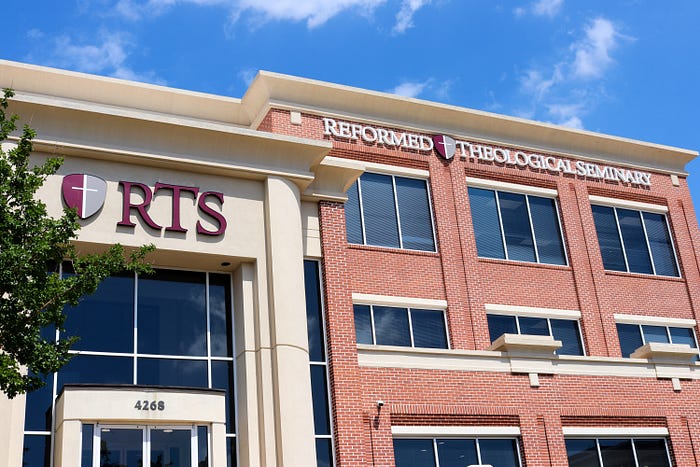
Recent public data shows that Reformed seminaries depend heavily on donor support, though the exact percentage varies by institution and year. Westminster Theological Seminary reported $16.03 million in contributions in 2024, or 47.7% of total revenue, while Reformed Theological Seminary reported $14.17 million in contributions, or about 42.9% of total revenue. Covenant and Westminster Seminary California also appear to rely substantially on donor support, though their figures require institutional reports rather than easily comparable Form 990 data.
When these donation totals are compared with enrollment, they often represent thousands of dollars per FTE student (full-time equivalent — a standard way of counting that converts part-time students into full-time proportions) each year, in some cases well over $10,000. There is clearly a willingness to make financial sacrifices for the sake of training men for ministry.
The other major source of seminary revenue is, of course, students. While precise net tuition numbers are difficult to compare publicly, ATS materials from its Economic Challenges Facing Future Ministers initiative reported median net tuition of about $7,800 per FTE student. This is not a Reformed-only figure, and actual student costs vary by school, aid package, church support, housing, and course load.
But even at those levels, tuition remains a significant burden once indirect costs are included. Most students cannot work full-time while completing a demanding M.Div. program. Many also enter seminary with prior debt, since the standard path usually requires a bachelor’s degree first.
To be fair, seminary tuition is not very different from other graduate programs. But most careers requiring six to eight years of formal training pay far more than pastoral ministry, allowing graduates to eventually catch up financially. Pastoral ministry is different. The educational burden is high; the expected financial return is comparatively low.
So if students are paying a lot and donors are giving even more, one might expect seminaries to operate at healthy surpluses. This is not usually the case. If you divide a seminary’s total operating expenditures by enrolled students, the numbers are disconcerting. ATS data shows that many seminaries operate at more than $50,000 per FTE student, while others are closer to the $30,000–$40,000 range. RTS, for example, reported $29.97 million in expenditures and 529 FTE students — about $56,600 per FTE student. There are some outliers like Covenant, but the numbers are still high. They reported $11.05 million in expenditures and 355 FTE students, or roughly $31,100 per FTE student.
What does this mean in plain English? To keep the doors open and everything running, seminaries often need close to $50,000 per year per student. This figure does not mean each student literally costs the school that amount. It means that sustaining the whole institutional structure — facilities, faculty, administration — works out to roughly that per enrolled student.
Reformed seminaries, like most formal post-secondary institutions, operate on large annual budgets. Smaller schools like Greenville Presbyterian Theological Seminary operate in the $3–4 million range, while larger schools like Reformed Theological Seminary run closer to $25–30 million, depending on the reporting source.
Why does it cost millions of dollars to train men for ministry? We need trained men. But do we need millions of dollars to train them?
At the immediate level, the answer is not mysterious. One of the largest expense categories is compensation: salaries, pensions, benefits, and payroll taxes. The highest-paid roles are often executive leadership positions — president, chancellor, provost, CFO. In larger seminaries, these roles commonly fall in the $200,000–$400,000+ range, while smaller seminaries more often fall in the $100,000–$200,000 range. Facilities are another major expense: buildings, maintenance, libraries, utilities, and related overhead.
This is not surprising. Institutions are expensive because people and buildings are expensive. But it does tell us something important: if seminaries are to become substantially cheaper, payroll and facilities are the main places where change would have to occur.
Unfortunately, the changes are not so simple. The difficulty is that many of these expenses are not isolated.

Picture a newly appointed board sitting around a table with the financials spread out before them. It currently costs about $50,000 per student to keep the school going, and there is not enough revenue to make ends meet.
“Start with marketing. It is not core to training pastors.”
The CFO shakes his head. “Marketing feeds enrollment. Enrollment feeds tuition. Cut that too sharply, and revenue goes down.”
“What about finance?”
“If we cut too much finance staff, we lose control of restricted funds. Donors often attach specific conditions to their gifts. If we cannot track and report those accurately, we risk losing donor confidence and future funding.”
“Then let’s be smarter about faculty. We cannot afford another professor with a PhD from an elite school and a long publication record. What about Pastor Jared from the local PCA church? He is godly, experienced, respected, and even said he would be willing to teach part-time or volunteer if needed.”
The CFO pauses. “Unfortunately, without the right academic credentials, he may not count toward our accredited faculty requirements.”
The room tightens.
“So the faculty have to meet accreditation standards.”
“Yes.”
“And accreditation requires the reporting staff we are trying to cut.”
“Yes.”
“And donor-restricted funding requires the finance staff.”
“Yes.”
“And enrollment requires marketing.”
“Yes.”
The structure of modern seminaries is like a dome held together by its own weight — each piece pressing against the others. Remove one piece too quickly, and the structure begins to crack.
Formal institutions for training men for ministry have existed for centuries, but the modern accredited seminary structure is far more complicated than earlier forms of ministerial preparation. It is this self-reinforcing administrative dome that makes training a few hundred men so costly.
The cost has several layers. Some expenses are directly tied to accreditation: assessment, reporting, institutional effectiveness, faculty credential requirements, registrar complexity, policy documentation, and compliance work. Other costs are indirectly tied to the professionalized academic model that accreditation supports: prestige faculty, expanded degree programs, donor expectations, student services, transferability, and institutional branding. Still other costs are simply the normal costs of running a modern institution: payroll, buildings, administration, fundraising, and maintenance.
But accreditation helps hold the whole structure together. It does not merely add a few administrative tasks. It supports a model of institutional legitimacy that seminaries feel they cannot easily abandon.
So if the current model is structurally expensive, the next question is obvious: why not remove accreditation?

Many of the positions just listed could be reduced or eliminated. The school would no longer need to prove compliance with an external accreditor’s standards. Pastoral training could also become more practical by dropping the prerequisite that students first complete a bachelor’s degree — a rule that exists primarily because accreditation defines the MDiv as a master’s-level degree.
Here is the primary issue, accreditation functions as a public badge of legitimacy. It signals recognized quality, professional credibility, transferability, and institutional seriousness to everyone whose confidence the seminary needs. That is why the issue is so difficult. Accreditation may make the institution more expensive, but it also reassures the very people it depends on.
Professors may not want to teach at a school that lacks recognized academic standing. Students aiming for doctoral programs need a degree that other institutions will recognize. Churches and donors may question the legitimacy of an unaccredited seminary, and there is always the fear that standards will quietly drop without external accountability.
But while accreditation matters for how an institution is perceived, what does it actually mean for the quality of a school?
No seminary sets out to have low academic standards or to reward lazy, poor-performing students. People and institutions with Reformed convictions in particular value careful reasoning, doctrinal precision, and thorough research — and this is exactly the kind of environment promoted in many accredited institutions.
But while accredited schools often contain serious academic environments, it does not follow that accreditation is the cause of those environments. Nor does accreditation guarantee theological orthodoxy, pastoral competence, or even rigorous scholarship.
If accreditation is such a strong marker of quality, why do the same agencies that accredit Reformed institutions also accredit theologically liberal ones? Union Theological Seminary in New York has a curriculum focused on interreligious engagement and social justice. Chicago Theological Seminary offers an LGBTQ studies certificate. Claremont School of Theology has historically been associated with Process Theology, a movement that views God as a changing, relational participant in a dynamic universe rather than as an omnipotent ruler. These are all equally accredited schools.
There is a strange tension in the Reformed world. We often criticize critical theory, theological liberalism, and other dominant movements in secular academia, while still treating degrees from elite institutions as marks of legitimacy. The irony is that we seek validation from institutions and systems that are often hostile to the theological convictions our churches are trying to preserve.
The point is not that accreditation is worthless. It may provide certain benefits: external review, transferability, institutional accountability, and protection against diploma-mill chaos. But those benefits must be weighed against the specific goal in view. If the goal is training ordinary pastors for local churches, does accreditation provide benefits proportionate to the cost it helps impose?
Another common assumption is that accreditation is a reliable proxy for academic rigor. It would follow that those who hold PhDs in theology are at the very least reliable sources. But some of the least reliable sources on basic historical claims about the New Testament world are credentialed theologians themselves. D.A. Carson has put a name to this pattern. In Exegetical Fallacies, he identifies what he calls “uncontrolled historical reconstruction” — speculative pictures of the first-century world that are then used to set aside what the biblical text plainly says — as a defining methodological problem in much credentialed scholarship.
Church history also complicates the assumption that the modern accredited model is the necessary form of ministerial preparation. Luther and Calvin were formally educated, but not through anything resembling a modern MDiv structure. Many other teachers and pastors like John Bunyan had no formal training at all. Reformed seminaries and churches rightly honour such men, but many would likely hesitate to ordain similar men today.
Accreditation has become a symbol of respectability whose benefits are assumed rather than carefully measured. It may help an institution look serious, but it does not guarantee academic rigor or theological orthodoxy.
To summarize: seminaries are expensive, they are expensive in large part because they are accredited, and accreditation does not mean as much as many people feel it does. Dropping accreditation would help — but cost is only the most visible obstacle. It is not the only reason fewer men are entering ministry. If we want more pastors, we have to ask what the current pathway is actually doing to the men who consider it. What follows is what I saw, and what many alumni have seen too.
The Pot-Committed Problem

The standard Master of Divinity program usually takes three to four years, depending on how many credits a student takes each semester. Because accredited master’s programs normally require a bachelor’s degree first, the full formal education process often takes six to eight years.
The bachelor’s degree can be in almost anything. A bachelor’s degree in astrophysics would satisfy this requirement, despite being of little benefit for actually preparing one for ministry.
In my experience, the small benefit this requirement confers comes with a very large trade-off: becoming pot-committed.
The term comes from poker. A player may start with a hand that looks promising, keep adding chips as the game unfolds, and then realize too late that he probably should have folded earlier. But by that point, he has invested so much that walking away feels almost impossible. He has become pot-committed.
Something similar can happen in pastoral training. A young man may begin with sincere desire and encouragement from his church. But before his character, gifts, pastoral instincts, and long-term suitability have been meaningfully tested, he may already be four years into a bachelor’s degree and thousands of dollars committed.
A few years in the pot. A few years more. Another student loan. A lengthy resume gap starts forming. And by the time he — or his church — realizes he may not be suited for ministry, he has already thrown a great many chips into the pot. Changing course becomes very difficult, and there is a real temptation to keep going simply because so much has already been invested.
Someone may respond: “Well, sometimes things just do not work out. That is life.” True enough. But the current structure creates unnecessary risk and unnecessary suffering for such men. It is disheartening how many seminary graduates and dropouts — including myself — end up working at places like AutoZone, jobs that required none of their expensive training. No offense to AutoZone. To the vast majority of employers who are not churches, a Master of Divinity is not a reason to hire someone, even if he graduated summa cum laude.
This problem is made worse when seminaries try to fund large overhead by attracting students who have little or no intention of pursuing ministry — creating degrees designed for enrollment rather than vocation.
Many men perceive this risk — six to eight years of training that has almost no use outside pastoral ministry — and avoid the pathway entirely.
Is Ministry A Skills Based Vocation?

In defence of requiring lengthy post-secondary training for ministry, it is common to hear statements along these lines: “If you would not want an untrained surgeon operating on your body, why would you want an untrained pastor shepherding your soul?” There is some truth in this. Pastors must be trained. Anti-intellectualism is a real danger, and some circles have treated formal training (or any book learning) as if it were inherently legalistic or man-centered. That is a serious mistake.
But the surgeon analogy contains a less defensible assumption: that pastoral competence is tested in the same way as technical professional competence.
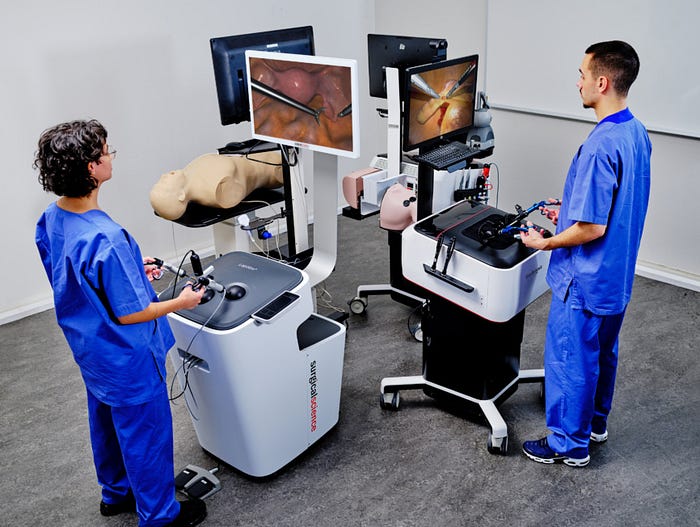
There are many skills-based jobs that require skills-based programs. If a surgeon fails to perform in a variety of simulated scenarios, he does not receive the credential. It is therefore sensible not to be operated on by such a person. In such fields, the program functions as a filter of capacity. If you cannot perform the task in training, that is strong evidence that you cannot perform it in the real world.
Pastoral ministry is not like that. There is no ministry simulator a student can hop into — at least I hope such a thing has not been created yet. Seminary can test some important ministry-related abilities: exegesis, doctrinal knowledge, writing, preaching, language work, historical understanding, and theological reasoning. These things matter. But many of the most important pastoral qualifications cannot be adequately simulated or graded in a classroom. Counseling, evangelism, patience, gentleness, hospitality, household management, godliness, courage, humility, and the ability to shepherd real people over time are not easily reducible to academic performance. A man can write excellent papers and still be quarrelsome, arrogant, cowardly, domineering, or unable to care for sheep.
The length and form of pastoral training should therefore be assessed pragmatically and biblically. How well does it cultivate gifts in called men? How early does it reveal whether a man is suited for ministry? And does it create unnecessary disadvantages for those who later discover they are not?
Called Or Not?
Consider again the surgeon. He spends years in training, passes every required test, and earns his credential. But eventually let’s say a particular man discovers the work is not a great fit — the hours, the environment, the day-to-day reality. This is disappointing, but not catastrophic. He can keep working while taking steps toward something else, and the skills and knowledge he has acquired will carry real value with future employers.
Pastoral ministry is different. A man who is not called to office — or who lacks the necessary maturity and character — is not merely in a less-than-ideal career situation. He is unqualified. If he continues anyway, he can do great harm.
This contributes directly to the pot-committed problem. A man may begin pastoral training at eighteen and risk discovering years later that he is not suited for ministry. Or he may delay until he is more mature and certain, but then the training pathway may require him to abandon a stable career, uproot his family, and enter a financially difficult season.
How many faithful ministries have started not with career pastors, but with men whom the congregation recognized as having the gifts of an elder? Often that recognition began in something as simple as faithful Sunday school teaching — competence and character showing up in small contexts before they were called to larger ones. As that elder taught and served, the congregation called him to a full-time pastoral office. This kind of pathway allows a mismatch to surface early — before significant debt and a derailed career make changing course nearly impossible.
I recall talking with an elder a number of years ago about a man who had completed a bachelor’s degree, an MDiv program, and an internship, only to end up not entering ministry. He said, “Oh well, God will use his training for good.” That may well be true. But I find this sort of response disheartening. It makes light of this man’s difficult situation, and of the system that put him in it.
I am thankful that man had the integrity not to enter ministry despite the difficult consequences. But for many men, the cost of starting over is simply too high. They keep moving toward ministry anyway.
In my experience, the mismatch between gifting and career path often does not become obvious to the candidate, to the church, or to both until the internship process late in the training. This is because the first several years function less as a test of pastoral capacity than as a test of academic endurance. By the time actual ministry experience begins, the sunk cost is too high to ignore.
Pastoral ministry is only for the called. But the current pathway can make life unnecessarily difficult for men who discover that they are not.
This problem does not end once a man enters ministry. In some cases, it extends into the ministry itself. Pastoral roles often lack clear off-ramps. Unlike many other vocations, pastoral ministry offers relatively few natural pathways for transition into other forms of work, especially after many years in office.
The Apostle Paul famously engaged in tentmaking, which meant he was not entirely dependent on the church for his physical survival — giving him a level of freedom and protecting the integrity of his ministry. By contrast, a modern minister with a highly specialized degree and few marketable skills outside the church may feel he has no choice but to stay.
This creates risk not only for the pastor, but also for the church. The current system can inadvertently produce a situation where a man remains in office partly for financial survival. Some men may not leave pastoral ministry until they are forced out. Congregants may also become hesitant to address serious problems because they know removing him could leave him with few obvious options. And men who, due to age or other factors, no longer have the stamina to shepherd and teach competently may delay retirement because they lack other viable paths.
At this point the problem has widened. It is not just that seminary is expensive. It is that the whole pathway can be vocationally brittle. It asks men to invest years in highly specialized training before their actual pastoral suitability has been tested, and then gives them few good options if the path does not lead where they expected.
This raises another question: why is the pathway so academically intensive in the first place? Part of the answer is accreditation. But another part is the ideal that often sits behind the modern MDiv: the pastor-scholar model.
The Pastor-Scholar Model

Many Reformed seminaries advertise and shape their curriculum around the idea that a Master of Divinity program should produce pastors who are also scholars. In that framework, accreditation becomes especially important because institutional respectability supports the goal of producing academically serious graduates.
At a basic level, the culture of academia can serve a good purpose. It can provide gifted men with the tools, discipline, and environment needed to grow as scholars. John Owen’s time at Oxford was certainly helpful in developing the abilities that later bore fruit in his theological writings.
Pastor-scholars are a real blessing to the church. But there is a difference between saying that some pastors are scholars and saying that every pastor ought to be trained as one.
There is a prevalent attitude — especially in certain Reformed circles — that every pastor should read deeply in academic literature, interact with specialized works, understand scholarly debates, use proper citation formats, and be conversant with the latest technical discussions. But many men are gifted preachers, evangelists, counselors, and shepherds without having the mind of Geerhardus Vos. They may have sound doctrine, a deep love for Scripture, and real ability to care for people, while not being especially suited to academic specialization. John Bunyan was not a brilliant scholar, but he was a godly preacher.
When seminaries fall too much in love with a single ideal of the pastor-scholar, they can ignore men who are gifted differently and still called. Programs designed around that one archetype may end up overwhelming students with reading loads and academic expectations that do not necessarily translate into pastoral competence. I recall talking to other students at my seminary who described being assigned more reading than they could process.
It has become almost a cliché that when a young seminary graduate begins pastoral ministry, he speaks in a way congregants find hard to understand and at times annoying. This is often chalked up to inexperience. But the problem is not too little experience — it is the wrong kind. He has been trained for years to speak in an academic register — Latin terms, dense theological vocabulary, the language of the classroom — and now finds himself addressing congregations who do not speak that language. Many newly-minted pastors spend their first years in ministry quietly unlearning how seminary taught them to talk.
The pastoral training process should cultivate different kinds of gifted men. This does not mean every pastor needs only vague sincerity. A pastor must be able to hold sound doctrine, teach the whole counsel of God, and handle Scripture responsibly. There is a baseline level of knowledge and ability that is necessary for faithful ministry.
But there is a major difference between the knowledge necessary for ordinary pastoral ministry and the highly specialized scholarship produced within academic guilds. I have a close relative with a shop where I sometimes work on my vehicle. What I love about his shop is that he has every possible tool I could ever need. He often chuckles about how few tools you actually need to do about 90% of the jobs — it is the last 10% of jobs that require the expensive, specialized tools, the ones that spend most of their time sitting in a cabinet.
It is hard to overstate how niche theological scholarship can become. A future pastor may benefit greatly from understanding basic Greek grammar, knowing how to use a good lexicon, and consulting serious Greek commentaries. But a journal article such as “A Discourse Analysis of the Greek Text of Jude: Functional Grammar and Semantic Macrosystems” is probably better left to a smaller group of specialists. Okay, you got me — I really do not like Greek discourse analysis.
This kind of work may have value for specialists, but pastoral training is not specialist training. Many seminaries and their professors struggle to know where this line is, too easily equating a man who cannot do a theological oil change with one who cannot do a full engine rebuild.
Books and academic resources can, like tools, have diminishing returns. Pastors have a limited amount of time and must think carefully about how they will use it. I am deeply thankful for good Christian scholarship; resources like Beale and Carson’s Commentary on the New Testament Use of the Old Testament have been invaluable to me. But a few well-chosen resources may often serve a pastor better than endless reading lists, niche research papers, and the pressure to build an ever-expanding theological library. The problem is not scholarship itself. It is the failure to distinguish between what is useful for the church’s scholars and what is necessary for ordinary pastoral ministry.
This has a direct bearing on how donor funds are being used. The appeal from seminaries is often framed simply: help us keep the doors open so future pastors can be trained. And in one sense, that is true. But the deeper question is what kind of institution donors are being asked to keep open.
Consider a recent post from Westminster Theological Seminary celebrating the arrival of custom-engraved stone panels for their new academic center. WTS is not unusual in this — the accredited seminary model is structured around features like these. Donors give sacrificially believing their money is directly training pastors, while much of the institutional model is built around maintaining academic prestige, large facilities, expansive libraries, and symbols of professional permanence. The issue is not dishonesty. It is stewardship. Donors are being asked to fund “pastoral training,” but the money may actually be sustaining a much larger and more expensive vision of what that training is supposed to look like.
The same disconnect appears on the church’s side. Many churches require a credential because they want doctrinally serious pastors, but they may not realize how specialized some seminary training has become.
Which raises a prior question: what does Scripture actually require of the men who lead and teach the church?
Biblical Qualifications
When looking at the New Testament qualifications for overseers, what is most striking is how character-focused they are. Paul and Peter emphasize that an elder must be above reproach, faithful in marriage, sober-minded, self-controlled, respectable, hospitable, gentle rather than violent, not quarrelsome, not greedy, and able to manage his own household well. He must not be a recent convert, arrogant, quick-tempered, or domineering, but upright, holy, disciplined, patient, and an example to the flock. He must also be able to teach, hold firmly to sound doctrine, exhort others in it, and rebuke those who contradict it. These qualifications are drawn especially from 1 Timothy 3:1–7, Titus 1:5–9, 1 Peter 5:1–4, 2 Timothy 2:24–26, and Hebrews 13:7.
Sound doctrine is clearly part of the biblical picture. This is where formal instruction in church history, theology, biblical interpretation, and biblical languages most naturally fits. A pastor must be able to teach the truth and guard the church from error.
But when sound doctrine is read within the larger context of these passages, it is difficult to see why so much time and money must be devoted to academic training in the name of this one requirement. The biblical qualifications do not describe a scholar first. They describe a godly man who is able to teach.
Reformed churches generally think through doctrine with care, comparing Scripture with Scripture and considering categories and distinctions with care. This is a strength. But there can also be a desire to over-standardize things God has left to the wisdom of churches. Pastoral training seems to be one of those areas.
The OPC Form of Government, for example, illustrates how easily a biblical concern can become an institutional requirement. XXI.3 opens with a serious and defensible claim: “It is highly reproachful to religion and dangerous to the church to entrust the preaching of the gospel to weak and ignorant men.” This is right. But the very next sentence moves immediately to a specific solution: the presbytery shall license a candidate only if he has received a bachelor of arts degree from a reputable college or university and has completed at least eighteen months of seminary. For ordination, XXIII.3 requires the full equivalent of a three-year theological degree. The biblical concern is that ministers must not be weak or ignorant. The institutional answer is a particular credential pathway. These are not the same thing. A man can satisfy the credential and remain unqualified, and a man can be deeply qualified without satisfying the credential.
There is also something worth noticing in how that progression reads. The document moves directly from “weak and ignorant men” to the absence of formal post-secondary education, as if the two concepts naturally belong together. What about the godly, well-read elder who has spent decades shepherding people, studying Scripture, and growing in wisdom? Is he weak or ignorant? Many Reformed churches deeply respect such men, yet we have somehow been conditioned not to see them as candidates for the pastoral office.
One reason MDivs are required is that a standardized credential is easier to evaluate than a man’s actual competence. It is simpler to say “he needs a degree” than to define clearly what a man should know about Scripture, theology, church history, pastoral care, preaching, and biblical languages before entering ministry. But if what we truly care about is the man’s knowledge and ability, then the credential is only a tool toward that end — not the end itself.
I know seminary graduates who did well in Greek and Hebrew when they took the courses, but no longer remember the basic grammar paradigms they learned in their first year. That does not mean the courses were worthless. But it does show that completing a requirement is not the same thing as retaining useful competence.
The mechanic analogy applies here. If a man is applying to work in a shop, a course in automotive repair may be useful, but the course is not the real standard. The real question is whether he can actually diagnose and fix a problem. Experienced mechanics can tell fairly quickly whether a man understands how an engine works, how to read symptoms, and how to solve problems under the hood. If the training was good, that competence shows in the work. If it was not, the certificate does not make him a mechanic.
Likewise, if seminary training has actually equipped a man to handle Scripture, teach sound doctrine, counsel wisely, and shepherd the flock, that should become evident under the care and examination of qualified elders. And if elders cannot evaluate whether a man is basically able to teach and shepherd, that itself reveals a deeper problem — one that cannot be solved by outsourcing the judgment to a credentialing institution. It may indicate that the elders themselves need better training.
Justifying six to eight years of mandated formal training also requires some kind of strong distinction between the qualifications of pastor and elder. Even if one believes elders primarily lead while pastors especially teach, it is hard to argue that sound doctrine is any less important for elders. Some churches near seminaries may develop a strong preference or informal norm that all elders have MDivs. But in most churches, this is plainly not practical, not biblically required, and not necessary for good doctrine.
A credential-heavy model creates a further systemic risk: the congregation and elders may be tempted to delegate nearly all spiritual authority to the one trained man. When he leaves, the church may feel that no one is left fit to lead — even if there is a plurality of godly, biblically qualified elders already in place.
Seminary may assist the church in training men, but it cannot replace the church’s responsibility to recognize, test, and examine men for ministry. That brings us to the constructive question: if the modern seminary model is not the only possible pathway, what should replace it?
A Church-Centered Alternative

Can any program produce the kind of character described in these passages? No. Programs do not produce godliness.
No amount of reading, essay writing, language work, or classroom discussion produces what only the Holy Spirit can produce. Seminary can impart knowledge and cultivate skills. But it cannot create godliness. It cannot replace the life of the church. As Carl Trueman has observed, deep spiritual formation takes place in the church — not in the classroom. Seminary can supplement that formation, but it cannot substitute for it. During a critical period of development, men can be removed from the very context in which their character should be most closely known and tested. The things the Bible primarily requires cannot be fully tested in an academic setting.
It was striking and encouraging to read through the comments under the Matthew Everhard video I mentioned at the outset. Many people noticed the same problems I have described here and reached a similar conclusion: more training needs to be brought back into local churches.
The issue was never primarily that seminaries lack generous donors. The way modern seminaries are designed makes it structurally impossible for them to be anything but exorbitantly expensive. And cost, serious as it is, is only part of a larger problem — a training pathway that is lengthy, academically professionalized, slow to test actual pastoral fitness, and too easily treated as the gatekeeper to ministry.
The argument here is not that seminary should be abolished or that no one should attend. It is that seminary should be reformed into a better tool — and that it should stop functioning as the only legitimate tool. A seminary freed from accreditation could offer intensive individual courses at a fraction of the current cost: church history, biblical languages, systematic theology, pastoral theology, biblical interpretation, or whatever areas a man’s church believes he needs to grow in. For another man, a combination of elder mentorship, church-based formation, and a handful of such courses might be everything he needs. The pathway should fit the man, not the other way around.
Since most of what is required to be qualified as a pastor is character-based, elders need to take the lion’s share of responsibility for assessing and cultivating young men — rather than over-deferring to seminaries and placing too much trust in a piece of paper. It would also be useful to have institutions or denominational bodies that evaluate the knowledge of prospective ministers and help identify areas of competency or weakness, including among current ministers. But the controlling responsibility should remain with the church, not the degree-granting institution.
This pathway would also be substantially cheaper, allowing many men to remain in their existing careers while being formed and tested over time. Then, if the elders and congregation recognize his gifts and character, he could move toward office without needing to uproot his life for a long professional degree.
A church-centered process would also help speed up the path for men who understand Scripture well, teach clearly, demonstrate godly character, and have already proven themselves in the life of the church — but who may not have the time, money, or need for a full formal degree. An MDiv program seems more professional. But it can create the illusion that one is qualified for ministry merely because he has completed a large collection of theology courses.
Seminaries do not need to disappear. What needs to change is our posture toward them — not the answer, not the gateway to ministry, but a tool to help called men. Seminary is a means to an end. It is not the end itself.
Conclusion

“Why aren’t there more new pastors? Where are they going? Why are they all retiring?” If we are being honest with ourselves, maybe we cannot find enough new pastors because we have been too busy setting up obstacles to keep them out of the pulpit. Maybe instead of asking congregants for more in the tithe basket, we should be asking some of those same congregants to pastor our churches.
Don’t be quick to write off what the Spirit may be doing in the life of a simple thirty-seven-year-old heavy-duty mechanic. Maybe give him a second thought — before hiring a twenty-four-year-old with little life experience, brought in from thousands of miles away, with little knowledge of who he actually is, simply because he has the credential.
And when such a man begins to sense a call to ministry, instead of encouraging him to take on debt and sending him away from his church, we should ask whether he might make a good pastor right here, soon — not years from now after seminary, but in the near future, in this church. If not yet, what would help him become one? It would do us well to remember that many of the apostles themselves “were unschooled, ordinary men.”
The standard for ministry has already been given in Scripture. The question is whether our systems reflect it. The goal is not to produce men who have merely completed a program but to recognize men who are known, tested, and found faithful by the church. The church must recover its responsibility — not only to train pastors, but to know them.
In 1845, a British expedition led by Sir John Franklin set out to find the Northwest Passage. His ships, HMS Erebus and HMS Terror, became trapped in Arctic ice. The surviving men eventually abandoned them and tried to walk south. Later searchers found remains and relics from the expedition, including silver cutlery.
Silver cutlery is not worthless. In another setting, it may even be a mark of refinement. But in the Arctic, when men are starving, freezing, and trying to survive, it becomes a symbol of tragic misprioritization.
Accreditation, prestige faculty, institutional respectability, and professional credentials are not worthless in themselves. They may have their place. But in a crisis of pastoral supply, the question is not whether these things are respectable. The question is whether they are worth carrying.
Churches may be clinging to symbols of institutional seriousness while facing a practical crisis. And if that is the case, the answer is not merely more money for the existing model. The answer is to ask whether the model itself needs to be reformed.